
A Home Designed for Permanence
From its earliest days, the General Rufus Putnam House was conceived as a structure meant to endure. Built during a time when much of the American frontier consisted of temporary shelters and utilitarian dwellings, this Federal Colonial home stood apart. It was designed not only to provide shelter, but to signal stability, intention, and confidence in a new nation still defining itself.
The house reflects the mindset of post-Revolutionary America—a period marked by optimism, careful planning, and belief in the future. Its solid construction, balanced proportions, and thoughtful siting on the land suggest that this was never meant to be a fleeting residence. Instead, it was built to last physically, socially, and symbolically, serving as a lasting anchor in a rapidly changing world.
That sense of permanence is evident the moment one approaches the property. The house does not overwhelm its surroundings or assert dominance over the landscape. Instead, it feels grounded and composed, settled naturally among trees and open fields. There is a quiet confidence in its presence, as though it has always belonged there—because, in many ways, it has.
Federal Colonial Style Explained
Federal Colonial architecture emerged in the late 18th century, influenced heavily by classical Roman and Greek ideals. In contrast to the more ornate Georgian style that preceded it, Federal architecture favored restraint, symmetry, and proportion. The emphasis was on harmony rather than grandeur, reflecting the values of a young republic seeking order and balance after revolution.
At the General Rufus Putnam House, these principles are expressed through clean lines, evenly spaced windows, and a sense of visual rhythm that carries from exterior to interior. The façade is dignified without being imposing. Decorative details are minimal, yet intentional, allowing craftsmanship and proportion to speak for themselves.
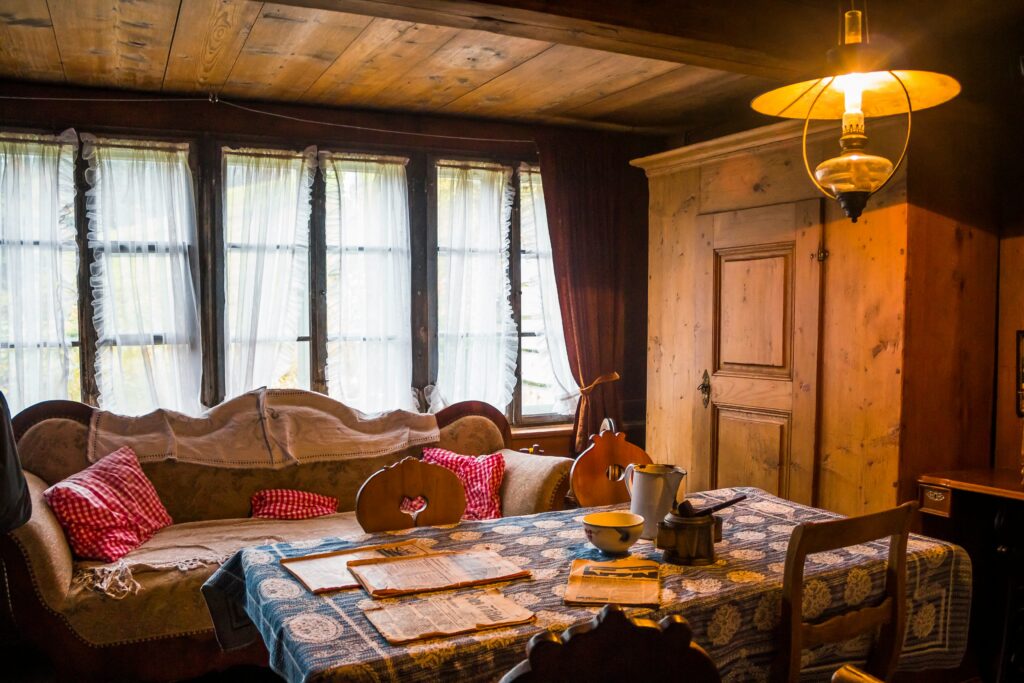
Inside, the layout follows a logical flow, with rooms arranged to serve both private domestic life and public gathering. This thoughtful organization reflects the multifunctional nature of homes during the era, which often served as places of work, discussion, and community engagement. The architecture does not demand attention, but it rewards careful observation, revealing subtle details that speak to the values and aspirations of its builders.
Restoration with Respect
Preserving a historic home of this caliber requires more than technical expertise—it demands deep respect for authenticity. Restoration efforts at the General Rufus Putnam House were guided by a commitment to historical integrity, ensuring that every intervention honored the original design and materials.
Where repairs were necessary, period-appropriate materials and methods were used whenever possible. Modern updates, essential for structural stability and longevity, were introduced with discretion, carefully integrated so as not to disrupt the home’s historical character. This balance allows the house to function safely in the present while remaining true to its past.
The result is a space that feels lived-in and authentic rather than staged or artificially recreated. Visitors experience the house not as a replica, but as a genuine survivor of history—a place shaped by time, use, and care. This approach underscores the importance of preservation as a discipline rooted in stewardship rather than reinvention.
The Role of the Landscape
The 7.5 acres surrounding the home are not merely scenic—they are essential to understanding the property’s historical identity. In the 18th century, land was inseparable from daily life. It represented sustenance, self-reliance, and a deep connection to the natural world.
Rolling meadows and stands of pine trees frame the house, creating a sense of openness while also offering protection and privacy. These natural features would have played a practical role in the home’s early years, providing resources and shaping patterns of work and movement across the property.
Stone fences, carefully maintained, trace the boundaries of the land and serve as tangible reminders of early agricultural practices. Built by hand and designed to last, they echo the same philosophy of permanence found in the house itself. Together, the landscape and architecture form a unified whole, reinforcing the feeling of stepping back into a slower, more deliberate time.
A Space for Reflection and Learning
Having once served as a museum, education remains central to the identity of the General Rufus Putnam House. The property invites visitors not only to admire its physical beauty, but to engage with the historical context that shaped it.
Each room tells a story—not just of architecture, but of daily life in early America. Visitors are encouraged to consider the political uncertainty of the era, the optimism of a new republic, and the practical realities faced by families navigating frontier life. Windows frame views that have changed remarkably little, while pathways across the land follow routes once shaped by necessity and routine.
This immersive experience transforms history from abstraction into something tangible. Rather than reading about the past, visitors walk through it, gaining insight into how space, design, and environment influenced the rhythms of everyday life.
Preserving More Than a Building
Historic homes preserve far more than wood, stone, and mortar—they preserve memory. The General Rufus Putnam House stands as a reminder that the American story unfolded not only in legislative chambers and battlefields, but in homes where people lived, worked, debated, and dreamed.
Its continued preservation ensures that future generations can experience history as something immediate and personal. By walking its halls and grounds, visitors connect with the human scale of the past—understanding that nation-building happened in places like this, shaped by intention, resilience, and care.
In safeguarding the General Rufus Putnam House, we preserve a legacy of thoughtful design, harmonious living, and enduring values. It remains a place not only to admire, but to reflect—offering a quiet, powerful reminder that permanence, when built with purpose, can transcend centuries.